Peptide Quality: Importance Of Third-party Recognition
While peptide purity isn't the only element, making use of improperly identified reagents is a recognized factor to irreproducible outcomes. For a 10-residue peptide with 99.5% combining performance, you 'd expect concerning 95% of the final product to be the full-length sequence before filtration. For a 30-residue peptide at the same effectiveness, that drops to approximately 86%. This is why longer peptides are harder to generate at high purity and generally cost more. Purity is the percentage of books in the shipment that have every page printed properly, in the best order, without any missing out on chapters and no added web pages stuffed in. A 95% pureness implies that out of every 100 "publications" in your batch, 95 are ideal copies and 5 have some type of mistake.The injector introduces a specific volume of example into the mobile-phase stream. Consistent injection quantity issues since straining the column can expand heights, misshape purity price quotes, or hide neighboring contaminations. A strong peptide testing workflow utilizes approaches that answer complementary concerns. The table listed below is the practical means to consider common tests when reviewing a peptide COA.
With each other, these analytical approaches provide the proof base for concluding that a peptide batch is suitable for study usage. Another associated term you may experience is web peptide web content, which is various from pureness. Web peptide web content refers to just how much real peptide (by weight) remains in the vial relative to non-peptide components like water, counter-ions (e.g., TFA), or buffer salts.Quality Assurance And Product Conformity In The Pharmaceutical Industry
Creative Proteomics is a relied on provider of proteomics evaluation services. Thanks to our superior scientists and powerful mass spectrometry platform, we off provides international customer with extensive and professional peptide pureness evaluation service by utilizing RP-HPLC. If you have any kind of concerns or details needs, please do not hesitate to call us.
What Hplc Can Not Prove Alone
They are labeled "for research use just" to make clear that they are meant for in vitro experiments or pet research studies, not for any kind of type of human usage. Actually, a lab offering peptide screening have to deliver data meeting the stringent analytical assumptions of firms like FDA and EMA [4] By using a certified third-party lab, peptide manufacturers or scientists ensure an unbiased and expertly documented assessment of quality, which is specifically what inspectors try to find. In addition, continuous independent screening supports conformity in set launch and quality control. Research laboratory validation for peptides implies utilizing clinical tests to verify a peptide's identification, purity, and make-up. In method, this typically entails third-party or independent testing by an external laboratory to validate that a peptide product in fact contains what the label asserts [2]A single common chromatographic method is often insufficient for peptides that are hydrophobic, highly standard, very closely relevant in turn, or partially purified. We supply HPLC and UPLC purity evaluation operations that focus on helpful separation instead of only generating a percentage. We make analytical workflows around the sample kind, sequence features, modification profile, and decision context. Tasks might include crude intermediates, cleansed peptides, saved lots, client-supplied products, or materials produced via our custom-made peptide synthesis system.
High purity is preferable because even small pollutants could hinder speculative results or analyses. This write-up will break down how peptide pureness is gauged, why it's distinct from peptide identity, what the common purity degrees (95%, 98%, 99%) represent, and what "research-grade" implies in technique for peptide reagents. Numerous peptide programs face analytical unpredictability before they stop working clinically. We make use of advanced reverse-phase HPLC to establish the purity of client peptide examples.What To Seek In A Certificate Of Analysis

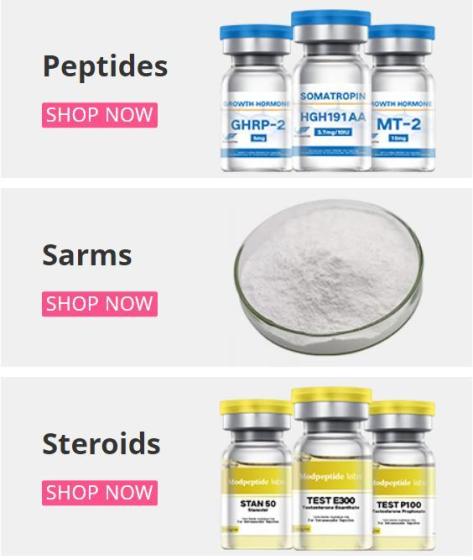
- Additionally, mass spectrometry (MS) can be utilized to confirm the peptide's molecular weight and sequence, offering more confirmation of pureness by identifying contaminants and deterioration products.Understanding of pureness degrees will likewise direct you if you ever before require a greater purity peptide for a particularly delicate assay.As an example, a pureness of 98% indicates that 98% of the peptide material is the designated item, while the other 2% may be undesirable residues of synthesis (such as incomplete series or amino acid removal variants).The bottom line is not to perplex pureness (HPLC percent of the primary peptide vs contaminations) with overall web content.It helps prevent conformity concerns such as fallen short audits or item remembers because of quality problems.